Frantic Preparations punishes sloppy play, by speeding the game right through the midgame. Other arenas have dramatically changed the early game and/or the late game. This week, the midgame is nearly nonexistent and if you aren’t prepared, you will bounce out very quickly.
In other words, welcome to the “Sonic the Hedgehog” Arena format. Gotta go faster!
Format Rules & Technical Data
Before the game begins, a Viper and a Scout are removed from each player’s deck. This has the effect of changing the beginning of the game slightly as well as nearly-completely removing the midgame, which I explore in the next section.
This week features both starting decks, and both Promo Packs. The inclusion of Colony Wars means a higher percentage of common and uncommon ships that provide 3 trade. Going big is once again an option, which is great because the Promo Packs have some amazing cards at 5+ cost.
Promo Pack 1’s inclusion means that bases are better than normal. I consider Starmarket and Breeding Site to be high-priority picks regardless of the rest of your deck. Fortress Oblivion and Starbase Omega are both useful, though the lack of a midgame holds them back a bit.
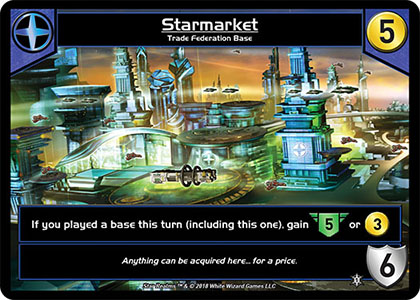
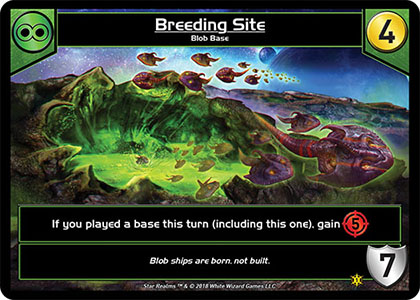
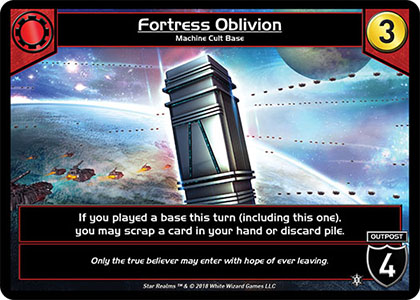
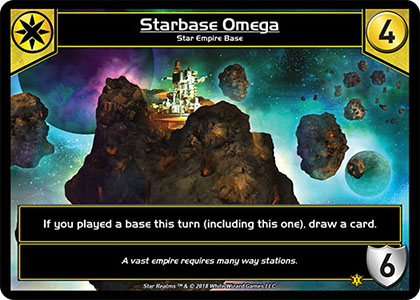
In my 10 games this week, games took an average of 19 turns. Games are slightly-faster than normal, especially against unprepared opponents.
Early Game: Advantage Player Two
In this series of articles, I often describe how some formats allow a player or a play-style to determine the flow of the game. This week, player two controls how the beginning of the game will play out, because they shuffle their deck first.
Because starting decks have only eight cards, player two shuffles their deck at the end of their first turn. Normally, with a ten-card deck, both players shuffle after their second turn. In this format, player one still shuffles after turn two but player two gets a full turn jump. This means it is very possible for player two to have 7+ trade on their second turn! Impossible in the normal game (excluding Gambits)!
Both players should purchase with this in mind. If there is an expensive card on the board, player one should determine before they play a single card whether or not they are going to fight for it or fight against it. If there is only one trade-generating card to buy, player one has the chance to lock their opponent out of the race for the expensive card. But if there is more than one, this becomes impossible (as player one still begins the game with only three cards on their first turn).
With this in mind, I created a three-step list of what I want to buy as player two. I didn’t always get it, but this method led to great results:
- Buy scrapping. Obviously. But you don’t really need more than two cards that will always scrap. (Count scrap-from-discard as a half-scrap.) I detail this in the next section.
- Buy bases. If you can’t buy scrapping, buy bases. Promo Pack 1 in this format warps their value. If any bases from that pack arrive, buy them and then start buying any others.
- If you are locked out of either of those, buy trade-row scrapping to deny them from your opponent on future turns. If they get one deck-scrapper and you get none, that’s ok.
Mid Game? What Mid Game?
Because each player starts with two cards scrapped from their deck, shuffles happen faster than normal. Player two will shuffle after turn 1, then after turn 3 (usually), then after their 5th turn (assuming they purchase 7 or fewer ships). Normally the third shuffle happens after a player’s 7th or 8th turn!
Scrapping is powerful normally, but it is even more powerful in this format. Cards you scrap from your deck this week can mean the difference between shuffling on turn 5 or 6, and again on turn 7 or 8. It isn’t just about removing low-impact cards from your deck. Because we start with fewer cards than normal, the ability to manage your deck size around upcoming shuffles is increased.
All of this adds up to games reaching a very powerful state starting on Turn 14 (player two’s seventh turn). Because games are faster, the impact of a missed purchase or a bad scrap is magnified. There is very little margin for error. In this week’s Arena Strategy Thread on the fan page, Morgan Tysor aka MarauderMo, had a great insight. “TURN OFF AUTOPILOT.” You need to think things through more than normal this week, because there is more to care about.
Conclusion and Game Log
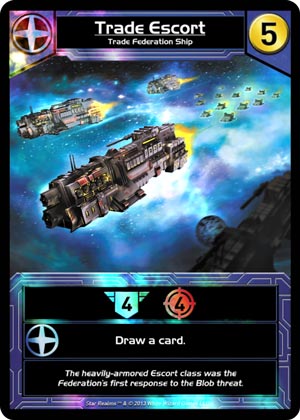
For the second week in a row, I began 6-1 and picked up a shiny. Trade Escort never looked so good! I ended with a 7-3 record overall. Here is a breakdown of my games, including lessons learned as I went:
Turn 18 win with 23 authority left.
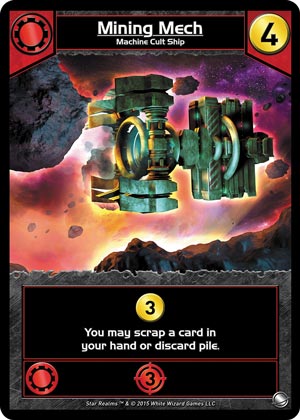
- Got early scrapping and took advantage of Starbase Omega. With Promo Pack 1 in the mix, bases are significantly more important than otherwise. My opponent wisely got Mining Mech, and that kept it closer than it otherwise would have been.
Turn 18 win with 50 authority left.
- Scrapped my entire starting deck. You don’t lose when that happens.
Turn 23 win with 16 authority left.
- Some authority-gain and more scrapping than my opponent, made the difference once again.
Turn 20 win with 40 authority left.
- My opponent purchased 5 Explorers on their first three turns. I don’t understand – even after replaying the game a couple of times. I just stuck to the basics and cruised to an easy win against someone else with a 3-0 record in the league. Just a strange game. (Sometimes that is going to happen.)
Tun 15 loss with 33 authority left for my opponent, piopiopio.
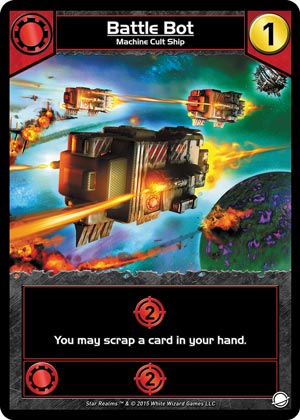
- (Saying that name out loud is fun, by the way. My ships are firing their lasers! piopiopio!) They purchased two scrappers, then bases. The only real option I had was heavy damage, but it wasn’t ever close. Going second is an advantage during this arena, but not when your opponent buys Battle Bot turn one and Mining Mech turn two, both before the first shuffle.
Turn 15 win with 8 authority left.
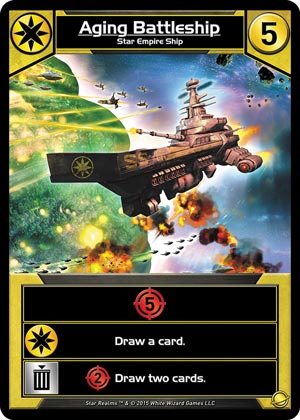
- My opponent hit with a turn that involved Gunship, scrap for 4 trade, buy and play Emperor’s Dreadnaught, and then even more damage coming in. I won dealing exactly enough damage – scrapping Aging Battleship to draw two cards, to have a chance to deal exactly enough on the next turn if the ally abilities worked out. They did. This was possible because I scrapped cards and my opponent didn’t — my two scraps meant I drew through my entire deck just barely. (This was a #scrapscoutsfirst game as neither player was on defense!)
Turn 20 win with 14 authority left.
- I barely did enough damage again. This was a comeback win. My opponent got scrapping early. I purchased Battle Screecher to ensure I could have premium picks, and to deny great cards for my opponent, as the game went on. I followed up with Trade Federation cards – authority gain is perfectly fine this week. I “stalled the game” all the way out to turn 20. That stall made my opponent’s scrap advantage not super important. I finished my first run with a shiny!
Turn 17 win with 29 authority left.
- Scrappers, buying some early trade to get to six-cost cards, then playing them to win.
Turn 23 loss with 15 authority left for my opponent, MoistureFarm.
- Scrapping their whole deck, leaving quick damage with allied ships to coast to victory. I was a turn behind the entire game, and not even a duplicated Mercenary Base hitting three factions was enough. (I had them beat next turn, but you don’t get any arena stars for “almost wins.”)
Turn 21 loss with 38 authority left for my opponent, stips.
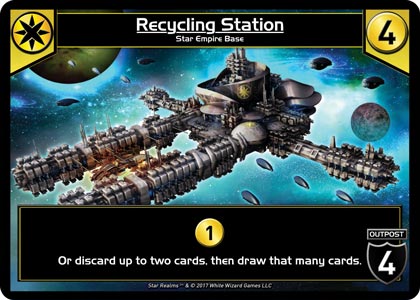
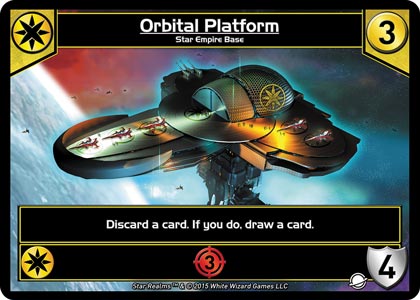
- We both got scrapping but they crushed me with every good base. Starbase Omega, Recycling Station, Orbital Platform and heavy ships ended my second run.
This format is very deceptive. It looks fast and simple, and you can play it that way. I believe your best chance to win is through careful management of your deck. Compare how often you are going to shuffle your deck to your opponent’s deck being shuffled, and see if you can take an advantage. Don’t just buy good cards – buy the best cards that allow you to keep your deck tight and neat. (Even if this means not buying sometimes.)
If you are chasing one of the final few Brain World avatars, given to the first 100 players that reach 100 arena stars, this is a great week to end on.
Good luck in the Arena!
Andrea Davis is an award-winning designer and producer. They have designed Star Realms promos, Hero Realms Boss Decks, and cards for Epic Card Game. Andrea is currently pursuing a Master’s Degree in Game Design and Development at the University of Limerick in Ireland.